
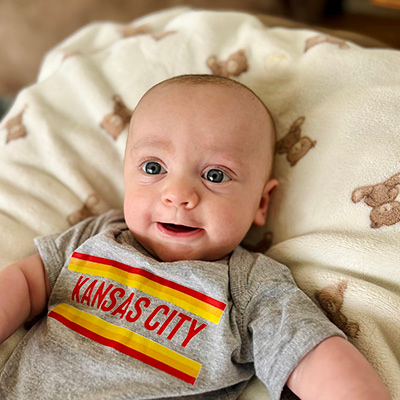
When Taylor and Caleb Jeter learned they were expecting their second baby, they knew fetal heart block (a condition that disrupts the electrical signals that control a baby’s heartbeat) was a possibility. Their first daughter, Reese, had been diagnosed with fetal heart block at 21 weeks and received a pacemaker shortly after birth. So when Taylor’s pregnancy with Tate reached 21 weeks and his heart rate suddenly dropped to 58 beats per minute, the family knew exactly what was happening—and they knew where they wanted to turn for care.
A Familiar Team, A New Journey
The Jeters returned to the Elizabeth J. Ferrell Fetal Health Center at Children’s Mercy for weekly, and eventually twice-weekly, monitoring with specialists in fetal health, maternal-fetal medicine, neonatology and cardiology. Tate’s heart rate continued to fluctuate, at times dropping into the 40s. His care team worked together to safely prolong the pregnancy while closely monitoring his condition and preparing for delivery.
From Delivery to Pacemaker Surgery
At 34 weeks, the team determined it was time for Tate to be born. A carefully coordinated plan put his C-section and pacemaker surgery in adjoining operating rooms, allowing the team to move quickly if needed. Tate arrived weighing four pounds and was stable enough to receive a pacemaker right away. The surgery went well, and after several weeks in the hospital, Tate went home with his family in early March.
Home Again—and Growing
Today, Tate and his big sister Reese are doing well and continue to receive follow-up care at Children’s Mercy. Their appointments are even scheduled on the same day. For Taylor, having already experienced a difficult fetal diagnosis and treatment with Reese made Tate’s journey feel different. The familiarity of the team, the coordinated care and the trust the family had built with their providers brought reassurance during an uncertain pregnancy.
“Without these people, we wouldn’t have a family,” said Taylor. “We’re very thankful.”
Read Tate’s full story at Children’s Mercy.
The Fetal Health Foundation’s Commitment
The Fetal Health Foundation is dedicated to ensuring that no family faces a prenatal diagnosis alone.
As FHF celebrates 20 years of supporting families, we continue building on a legacy of education, connection, and advocacy to improve the experience of families navigating fetal diagnoses.
Throughout Fetal Syndrome Awareness Month — and every month — FHF works to:
- Provide trusted educational resources for families
- Connect families with experienced fetal care centers
- Increase awareness of fetal conditions and available care options
- Support research that advances diagnosis, treatment, and outcomes
- Foster collaboration among families, healthcare providers, researchers, and industry partners
 Twenty years of support. A future of hope. Together, we can increase awareness, inspire hope, and ensure that every family has access to the information and support they need throughout their journey.
Fetal Syndrome Awareness Month:
Every Diagnosis Deserves Awareness. Every Family Deserves Support.
Learn More
If you or someone you know has received a prenatal diagnosis, Fetal Health Foundation’s Resource Directory can help connect families with information, organizations and support. You can also learn more about finding a fetal care center and the specialized care available to families facing a fetal diagnosis.