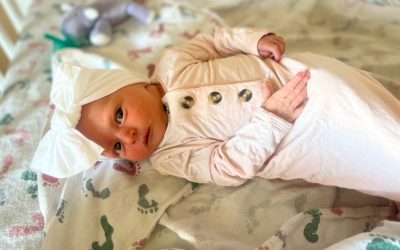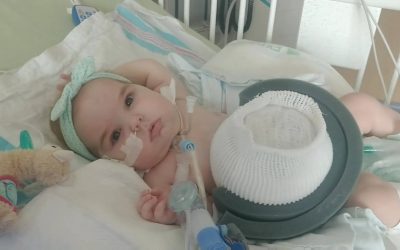
Ten years ago, Abigail Beutler was born without kidneys, a condition called bilateral renal agenesis. Against all odds, she’s alive today to play with her Breyer horses, read her favorite Paul Revere adventure book, and challenge her brother in archery. The family was...
News
Preschooler Thriving Three Years After Fetal Surgery for Spina Bifida
When faced with a severe form of spina bifida, Iliana underwent cutting-edge in-utero surgery at Stanford Medicine Children’s Health. Today she is thriving thanks to her mother’s courageous decision.
“I had the chance to give my baby a better opportunity in life, and I took it.”
A multispecialty Stanford Children’s care team treats baby with rare genetic condition
Alyssa was five months along and an ultrasound revealed that their baby, Nya, had a heart condition, ductus arteriosus.
Alyssa was told that her daughter might need surgery immediately after being born.
Cecelia: Expert Care for Fetal Heart Block Before and After Birth
When Brittany and Nicholas’ unborn baby, Cecelia, was diagnosed with fetal heart block at 24 weeks gestation, their lives changed immediately — in the most literal sense of the word. They lived in Montana and when their doctor first suspected the heart issue, he told...
Charlotte: Surviving a Fetal Omphalocele and Finding Silver Linings
When Charlotte first received an omphalocele diagnosis, her parents didn’t know it’s severity. After one of the longest months of their lives, they got some good news. Maternal fetal medicine specialists at the Colorado Fetal Care Center diagnosed Charlotte with an isolated omphalocele, meaning a small part of her intestine was growing outside her abdomen but it wasn’t affecting other organs.
Fetal Surgery for Spina Bifida: Jaxyn’s Story
Fetal surgery for spina bifida is improving outcomes. The fetal surgeons at Cincinnati Children's Fetal Care Center, who have extensive experience and innovative intervention therapies to help treat spina bifida in utero, recently shared this story of hope with the...
World’s first stem cell treatment for spina bifida delivered during fetal surgery
Three babies have been born after receiving the world’s first spina bifida treatment combining surgery with stem cells. This was made possible by a landmark clinical trial at UC Davis Health.
The new treatment, delivered while a fetus is still in the mother’s womb, could improve outcomes for children with this birth defect.
Pioneering Fetal Medicine Center Gathers Thousands for 26th Annual Family Reunion
The annual reunion brings together a unique community of families who have shared similar struggles. Nearly all the children in attendance had been prenatally diagnosed with a birth defect, such as spina bifida, congenital diaphragmatic hernia, or twin-twin transfusion syndrome, that had potentially devastating outcomes.
Fetomaternal Alloimmunization: Alexandra’s Story
I was diagnosed with fetomaternal alloimmunization, a condition in which a mother’s body creates antibodies against a fetus’ blood antigens. This diagnosis crushed us. My husband and I wanted a lot of children, and now we were left wondering whether we could even have a second.
Hydrops Fact Sheet | UCSF Hydrops Center of Excellence
Hydrops fetalis is a serious condition that affects about 1 in 1,700 pregnancies. For many families, answers about why this condition occurs have been in short supply because the cause is often not identified through standard testing.
Liam: Fetal Surgery for Myelomeningocele (MMC) Spina Bifida Repair
“The doctor came in and handed me a box of tissues,” Katie recalls. “She was saying something about an abnormal pregnancy, shunts, abnormalities of the left leg, club foot. I was in complete shock at that point, and I couldn’t really make out what she was saying because it felt like time was suspended.”
In a span of two hours, their lives had been turned upside down.
Giant Omphalocele: Patient born with organs outside of her abdomen receives transformative care
When Brianne Jacobsen was 20 weeks pregnant, her ultrasound revealed that her developing baby’s internal organs were sticking out of its abdomen. The birth defect, known as an omphalocele, required the higher level of expertise of the UC Davis Fetal Care and Treatment Center team.