For many families, the first question after receiving a prenatal diagnosis is: What is a fetal syndrome? A fetal syndrome is a condition or group of abnormalities that develops during pregnancy and may affect a baby’s growth, organs, or overall development. Some fetal syndromes have genetic causes, while others result from structural differences, pregnancy complications, or causes that remain unknown.
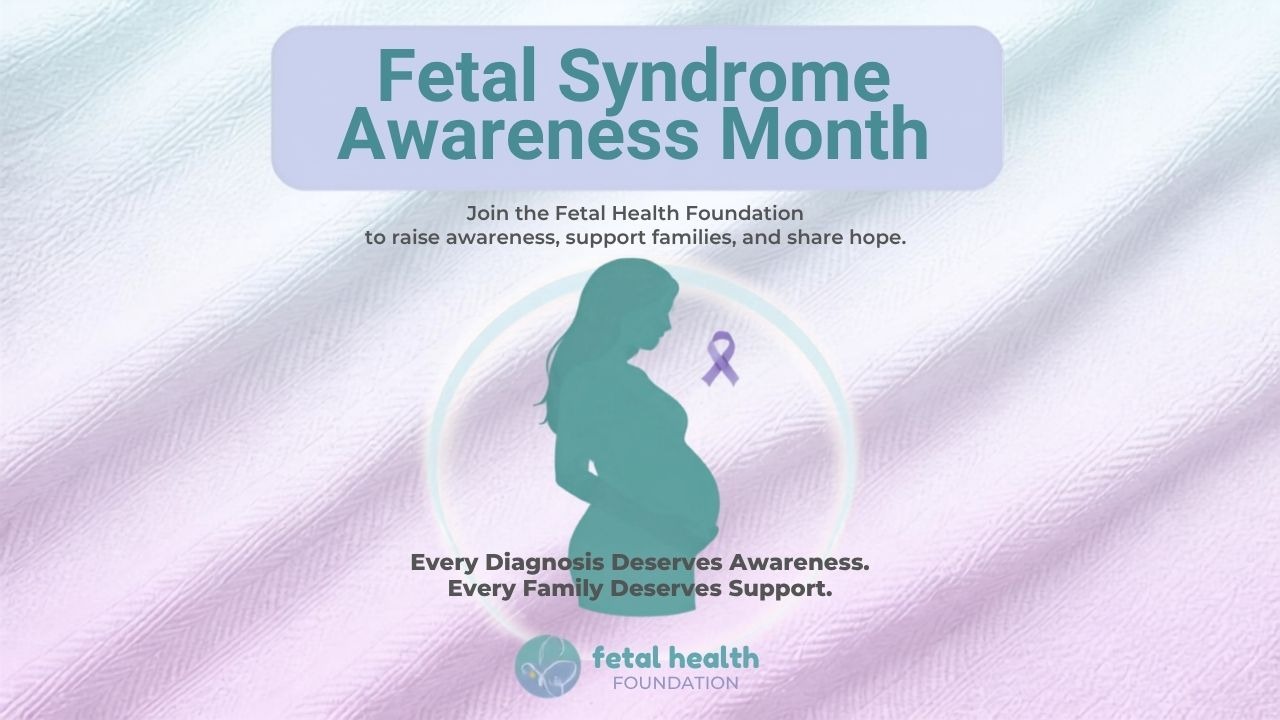
Each August, Fetal Syndrome Awareness Month shines a light on the conditions that can affect a baby before birth and the families navigating these complex journeys. This year is especially meaningful as the Fetal Health Foundation celebrates 20 years of supporting families, advancing awareness, providing education, and connecting families with specialized care.
It is important to remember:
- not every prenatal diagnosis is a syndrome
- not every fetal condition has the same cause or outcome
- early diagnosis and access to specialized fetal care can make a meaningful difference for many families.
✨ A prenatal diagnosis can bring uncertainty — but with the right information, specialized care, and support, families can move forward with knowledge and hope.
More Commonly Diagnosed Fetal Syndromes and Conditions
Fetal syndromes and anomalies include a wide range of diagnoses, each presenting unique challenges and requiring individualized care.
Some commonly recognized conditions include:
- Twin-to-Twin Transfusion Syndrome (TTTS): A serious complication affecting identical twins who share a placenta, where blood flow becomes unevenly distributed between the twins.
- Spina bifida: A neural tube defect affecting the development of the spine and spinal cord.
- Congenital heart defects: Structural problems with the heart that can affect how it functions after birth.
- Congenital diaphragmatic hernia (CDH): A condition where an opening in the diaphragm allows abdominal organs to move into the chest.
- Lower urinary tract obstruction (LUTO): A condition that can interfere with a baby’s ability to empty the bladder.
- Intrauterine growth restriction (IUGR): When a baby is smaller than expected during pregnancy.
- Twin anemia-polycythemia sequence (TAPS): A complication of monochorionic twins where one twin develops anemia and the other has too many red blood cells due to unequal blood exchange.
- Selective Intrauterine growth restriction (sIUGR): A complication of monochorionic twins where one twin develops anemia and the other has too many red blood cells due to unequal blood exchange.
✨ While these conditions vary widely, they share a common need: timely information, expert evaluation, and access to experienced fetal care teams.
Why Awareness of Fetal Syndromes Matters
Although many fetal conditions are considered rare, their collective impact is significant.
❓ Did you know ❓According to federal health tracking agencies, approximately 900,000 pregnancies in the United States and an estimated 25 to 30 million pregnancies worldwide are affected annually by conditions that can significantly affect fetal health and outcomes, making early diagnosis and access to specialized care critical.
Behind these numbers are thousands of families across the United States navigating a fetal diagnosis each year, including:
- Congenital heart defects, the most common type of birth defect, affects nearly 40,000 births.
- Neural tube defects, including spina bifida, affect approximately 1,300 pregnancies.
- Twin-to-Twin Transfusion Syndrome (TTTS) affects between 1,000 and 3,000 pregnancies.
For 20 years, the Fetal Health Foundation has worked to provide awareness, education, and connections to care that help families navigate these complex journeys.
✨ Fetal Syndrome Awareness Month reminds us that every family deserves access to accurate information, specialized care, and support — no matter how rare the diagnosis may be.
The Importance of Early Diagnosis, Care, and Support for Fetal Syndromes
Advances in prenatal imaging, fetal intervention, and multidisciplinary care have changed what is possible for many families facing a fetal diagnosis.
Early detection can help families:
✓ Better understand their diagnosis
✓ Connect with specialists experienced in their condition
✓ Explore treatment options, including prenatal interventions when appropriate
✓ Develop a coordinated plan for pregnancy, delivery, and newborn care
In some cases, fetal surgery or other prenatal interventions may improve survival or reduce long-term complications. Even when intervention is not possible, specialized care teams help families prepare, make informed decisions, and access the support they need.
✨ Awareness drives referrals. Referrals connect families to expertise. Expertise can change outcomes.
The Fetal Health Foundation’s Commitment
The Fetal Health Foundation is dedicated to ensuring that no family faces a prenatal diagnosis alone.
As FHF celebrates 20 years of supporting families, we continue building on a legacy of education, connection, and advocacy to improve the experience of families navigating fetal diagnoses.
Throughout Fetal Syndrome Awareness Month — and every month — FHF works to:
- Provide trusted educational resources for families
- Connect families with experienced fetal care centers
- Increase awareness of fetal conditions and available care options
- Support research that advances diagnosis, treatment, and outcomes
- Foster collaboration among families, healthcare providers, researchers, and industry partners
✨ Twenty years of support. A future of hope. Together, we can increase awareness, inspire hope, and ensure that every family has access to the information and support they need throughout their journey.
Fetal Syndrome Awareness Month:
Every Diagnosis Deserves Awareness. Every Family Deserves Support.
Share this resource. Help families, healthcare providers, and communities find the information and support they need after a fetal diagnosis.
Your support makes this work possible. Consider making a donation to FHF.