
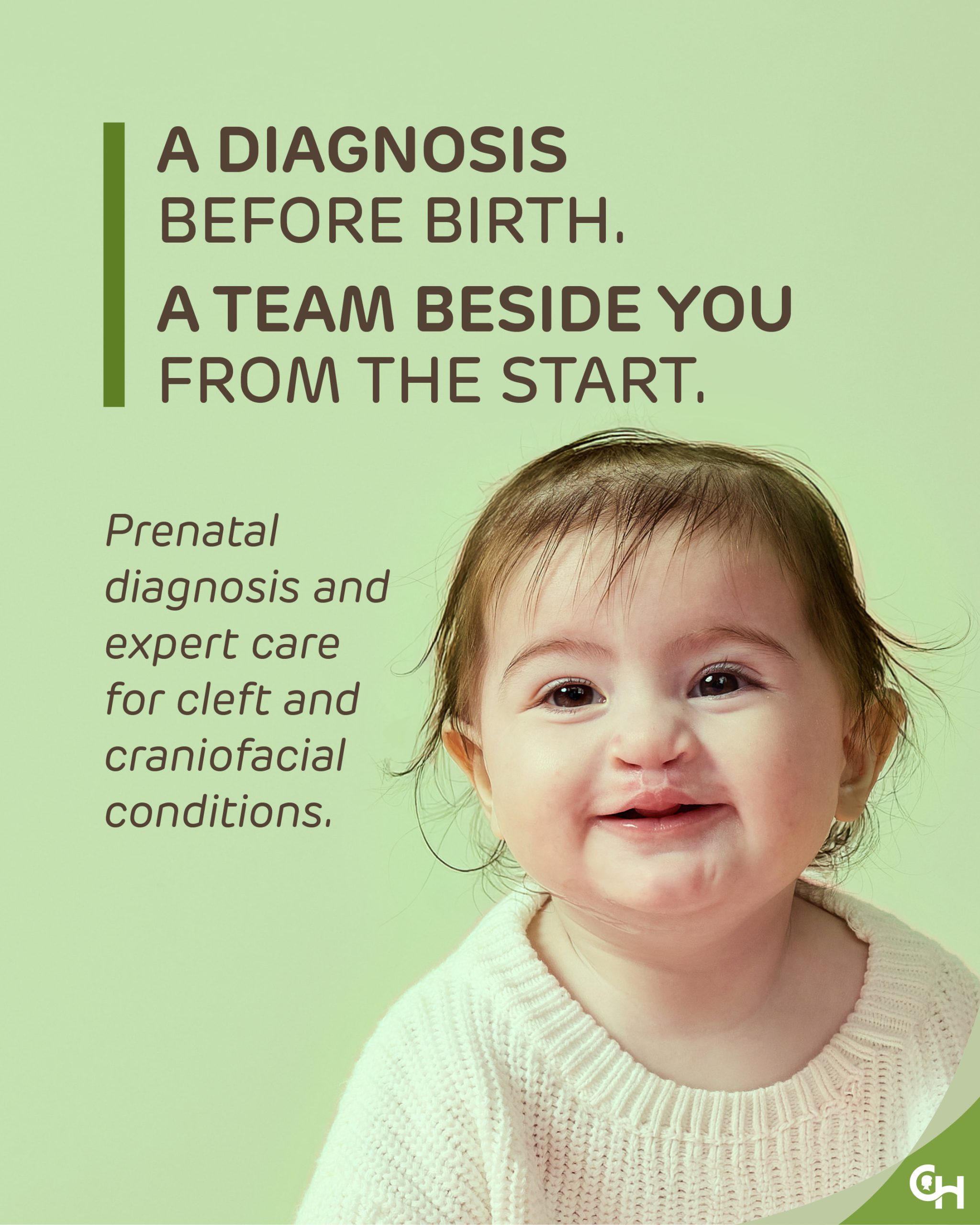
Cleft Lip and Palate: What Is It?
Cleft lip and palate occur when the tissues that form the upper lip or roof of the mouth do not completely fuse during early pregnancy. A baby may have a cleft lip, cleft palate, or both, with varying degrees of severity. Most cases occur without a known cause, although genetic and environmental factors can contribute. Worldwide, cleft lip with or without cleft palate affects approximately 1 in 700 births.
Prenatal Diagnosis and Delivery Planning at CHOP
Many cases are identified during the routine 20-week anatomy ultrasound. If either condition is suspected, CHOP offers a comprehensive prenatal evaluation that may include high-resolution ultrasound, fetal MRI, fetal echocardiography, and genetic counseling when appropriate. Families meet with maternal-fetal medicine specialists, plastic surgeons, nurse coordinators, and other experts who create an individualized care plan before delivery. Parents also receive practical guidance, including feeding education, specialized bottles, and ongoing support so they feel confident caring for their baby from day one.
Specialized Treatment from Birth Through Childhood
One of the greatest challenges after birth is feeding, particularly for babies with a cleft palate. CHOP’s experienced team provides personalized feeding strategies and close monitoring to help babies grow and thrive. Surgical repair is typically performed during the first year of life, with ongoing care that may include speech therapy, hearing evaluations, orthodontics, dental care, and additional reconstructive procedures as children grow. Throughout every stage, care is coordinated by an experienced multidisciplinary team focused on achieving the best possible outcomes.
Why Families Choose CHOP
CHOP’s Cleft Lip and Palate Program, founded in 1953, is one of the largest and most experienced programs in the country. Families benefit from coordinated care across multiple specialties, seamless communication between providers, and long-term support that extends from prenatal diagnosis through adolescence. Beyond treating the cleft itself, the team is committed to helping every child thrive and giving families the knowledge, confidence, and support they need throughout their journey.