Three babies have been born after receiving the world’s first spina bifida treatment combining surgery with stem cells. This was made possible by a landmark clinical trial at UC Davis Health.
The new treatment, delivered while a fetus is still in the mother’s womb, could improve outcomes for children with this birth defect.
Michelle Somers
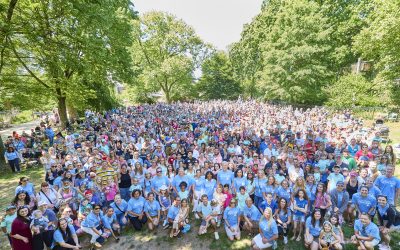
Pioneering Fetal Medicine Center Gathers Thousands for 26th Annual Family Reunion
The annual reunion brings together a unique community of families who have shared similar struggles. Nearly all the children in attendance had been prenatally diagnosed with a birth defect, such as spina bifida, congenital diaphragmatic hernia, or twin-twin transfusion syndrome, that had potentially devastating outcomes.
Fetomaternal Alloimmunization: Alexandra’s Story
I was diagnosed with fetomaternal alloimmunization, a condition in which a mother’s body creates antibodies against a fetus’ blood antigens. This diagnosis crushed us. My husband and I wanted a lot of children, and now we were left wondering whether we could even have a second.
Hydrops Fact Sheet | UCSF Hydrops Center of Excellence
Hydrops fetalis is a serious condition that affects about 1 in 1,700 pregnancies. For many families, answers about why this condition occurs have been in short supply because the cause is often not identified through standard testing.
Liam: Fetal Surgery for Myelomeningocele (MMC) Spina Bifida Repair
“The doctor came in and handed me a box of tissues,” Katie recalls. “She was saying something about an abnormal pregnancy, shunts, abnormalities of the left leg, club foot. I was in complete shock at that point, and I couldn’t really make out what she was saying because it felt like time was suspended.”
In a span of two hours, their lives had been turned upside down.
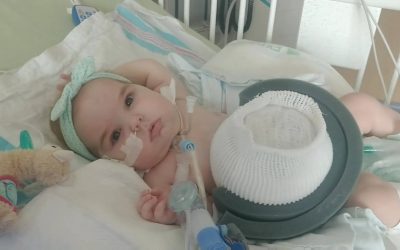
Giant Omphalocele: Patient born with organs outside of her abdomen receives transformative care
When Brianne Jacobsen was 20 weeks pregnant, her ultrasound revealed that her developing baby’s internal organs were sticking out of its abdomen. The birth defect, known as an omphalocele, required the higher level of expertise of the UC Davis Fetal Care and Treatment Center team.
Fetal Hydrops: Successful In-Utero Surgery by Oregon Health & Science University’s Fetal Care Team
Fetal hydrops is a rare, but far too often fatal condition. The Fetal Health Foundation is thrilled to share, with their permission, a success story and video from Oregon Health & Science University’s Fetal Care team. Stories like this one, of a healthy baby born...
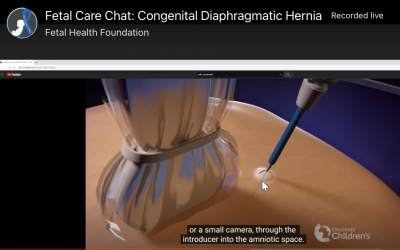
Congenital Diaphragmatic Hernia (CDH): Fetal Care Chat
Video: Congenital diaphragmatic hernia, or CDH, and treatment options were the topics of conversation for experts from Cincinnati Children’s Hospital
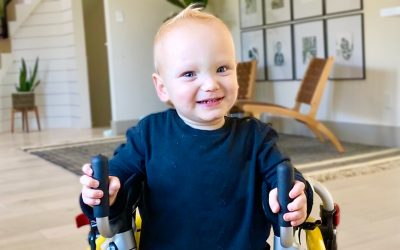
Toddler’s Unstoppable Smile Defies Challenging Start due to LUTO Fetal Diagnosis
“He has so much joy. He’s always smiling, even if it’s a hard day,” says Mandy, Kaleb’s mom. “It’s weird to think of what he has been through at such a young age, but he’s full of life despite all of it.”
How Mono-Mono Twins Overcame Incredible Hurdles
When Beth Kanemoto was pregnant with identical twins Kai and Klay, it felt like every two weeks she received more bad news. First, they learned the pregnancy was high risk. Initially, doctors thought the twins might be conjoined, but they soon learned that instead, Klay and Kai were considered mono-mono twins, meaning that they shared just one amniotic sac with no barrier between them.
Birth Defect Diagnosis: Understanding Your Options
When parents learn that their baby has a birth defect, they experience emotions like confusion, blame, sadness and worry.
As a fetal-pediatric surgeon in the Cincinnati Children’s Fetal Care Center, I encounter families who have just learned that they’re expecting a baby with a birth defect and we’re their next stop….
Advocacy from Anguish: Bethany Weathersby’s Story
After a diagnosis of maternal fetal alloimmunization and losing baby Lucy to hemolytic disease of the fetus and newborn (HDFN), Bethany took action. She made it her mission to ensure that other mothers diagnosed with maternal alloimmunization had education about the risks of the disease and knew the steps for proper medical care and treatment so that their babies could survive HDFN.