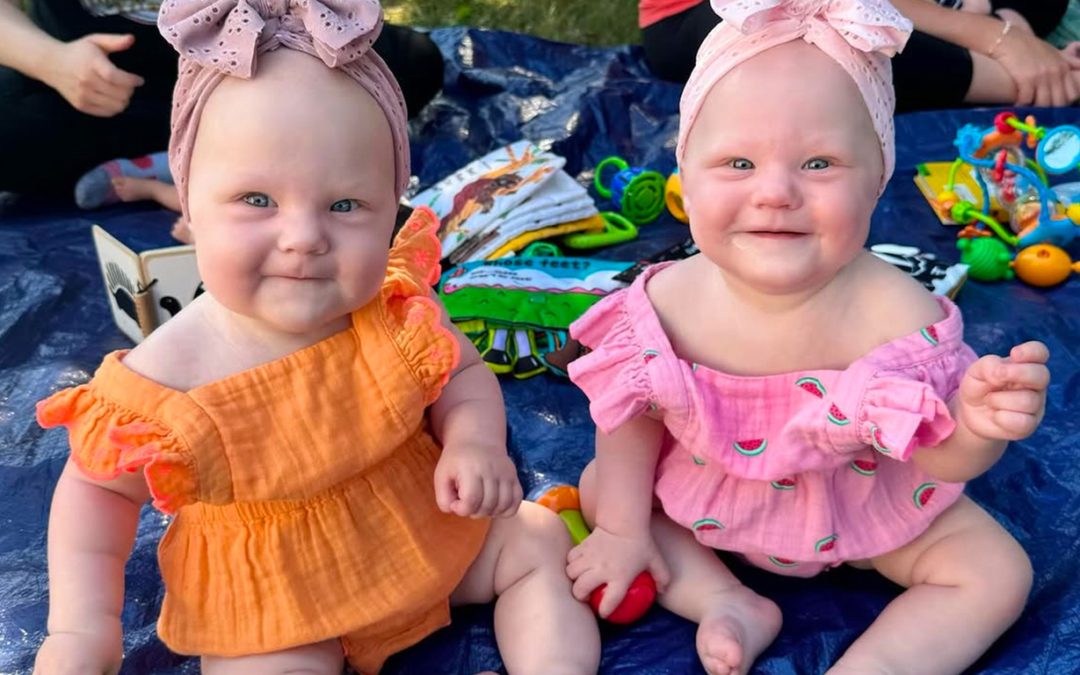
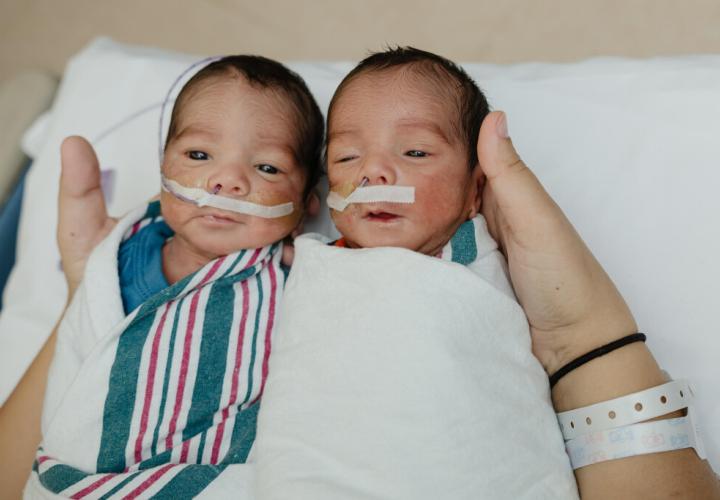
At 12 weeks, Jackie and Trevor received a frightening diagnosis: their unborn twins had twin-twin transfusion syndrome. With CHOP’s fetal care team, a complex surgery offered new hope—and today, their daughters are thriving.
Kaelyn thought she might lose both her babies when Twin-to-Twin Transfusion Syndrome entered the picture. But thanks to the “amazing, amazing people” at Connecticut Children’s Fetal Care Center, she is enjoying life with her two healthy identical twin boys and wants parents to know that there is help and hope.
Fetal Health Foundation Medical Advisory Board member Dr. Timothy Crombleholme, MD, who leads the Fetal Care Center at Connecticut Children’s, shares six important details to consider when your baby needs fetal intervention not just to survive, but to thrive.
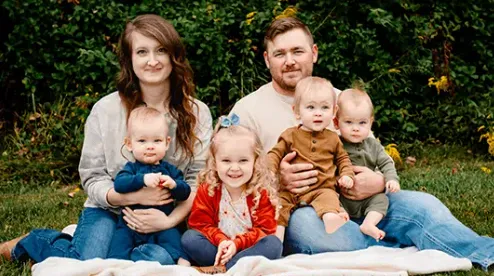
Performing surgery on triplets is more complex than on twins. In Tiffini’s case, there were two placentas: Hannah had one placenta all to herself, while Sophia and Isabella were sharing the other placenta, albeit unequally. Sophia and Isabella were affected by TTTS when the volume of blood flow across the connecting blood vessels between them became uneven, with Isabella getting too much and Sophia getting too little.
Fetal Health Foundation founder and Fetal Care Chat host, Lonnie Somers welcomes three amazing pioneering women in fetal medicine. Dr. Jenan Miller, Dr. Courtney Stephenson, and Dr. Diana Farmer.